Showing posts with label Shark River Inlet. Show all posts

Monday, May 11, 2026

Cedar Bonnet Island | Barnegat Lighthouse SP 5/11--Least Tern, Cedar Waxwing

Least Tern
I returned this morning to Cedar Bonnet Island despite the blustery weather. It's days like this, cool, windy, wet, that make the cliche about going directly from winter to summer without a spring inevitable. I didn't think much would be around and I was right, but I did, finally, break a 4-month 10-day streak of not seeing a Cedar Waxwing. A half dozen flew overhead and this time low enough for me to count them. Not the ideal look for what is my favorite bird, but after 130 days, I'll take it. 

A portion of the flock roosting on the beach
Cedar Bonnet was just a quick walk on the way to Barnegat Lighthouse SP. This time of year the pool area is stringed off for breeding Piping Plovers and Least Terns and I wanted to see the terns. Fortunately, the wind died down and so the supposed real feel of 41 degrees didn't seem too onerous. As I walked along the dunes down to the beach, I could hear the terns, but none of them seemed to be around until suddenly, about halfway down, they started making an appearance, first as one or two but by the time I reached the ocean, dozens upon dozens were roosting on the beach, their back turned toward the wind. I saw a count of 66 yesterday, and I thought, when I saw a flock take off from the beach, that there must be at least 100, but the eBird filter balks at more than fifty. This looks like it is going to be a major breeding colony, much larger than the one up by the Shark River inlet in Belmar. It's an impressive sight and a hopeful sign. I also saw a couple of the Piping Plovers and a half dozen American Oystercatchers which also take advantage of the protected area. Surprisingly, I only saw one Forster's Tern and no Common Terns, which I was also hoping for. Purple Sandpipers, a park specialty, are still hanging in; Harlequin Ducks long gone. 

The Barnegat Lighthouse list:

36 species
Brant  85
Mallard  2
American Black Duck  2     Pool
Black Scoter  20
Ruby-throated Hummingbird  1
American Oystercatcher  6
Semipalmated Plover  1
Piping Plover  2
Willet  1
Greater Yellowlegs  2
Ruddy Turnstone  6
Sanderling  25
Purple Sandpiper  20
Laughing Gull  10
American Herring Gull  15
Great Black-backed Gull  10
Lesser Black-backed Gull  1
Least Tern  50     50+
Forster's Tern  1
Common Loon  1
Double-crested Cormorant  20
Great Egret  1
Osprey  2
Fish Crow  1
Gray Catbird  1
Northern Mockingbird  1
American Robin  3
House Sparrow  4
House Finch  1
Song Sparrow  1
Eastern Towhee  1
Red-winged Blackbird  5
Common Grackle  1
Boat-tailed Grackle  2
Common Yellowthroat  3
Northern Cardinal  1

Great Egret in full breeding plumage

Wednesday, January 24, 2024

Shark River Inlet 1/24--Black Guillemot

Black Guillemot
Loathe as I am to stand on a jetty scoping the ocean, under gray skies in a heavy mist, that's what I did this morning--in two places. Given the forecast, I figured there wasn't much chance of getting any walking in today, so before the bad weather really kicked in, I decided I may as well try for the continuing Black Guillemot that has made itself at home at the Shark River inlet.  

I had read that this rare (in NJ) alcid was "off the north jetty," so naturally I set up on the south jetty, where I always go, figuring I'd be able to spy it from there. I'd also seen one comment that it was "ridiculously easy to see." Heh heh. 

Within 5 minutes I was disgusted with seawatching. And the guillemot wasn't showing. But I was then joined by a birder from the exotic realms of Hunterdon County. He had reasoned that I knew what I was doing. I soon disabused him of that notion, telling him that while the bird was supposedly north of us, I was hoping to find it from our present position. And he did. For a moment. It was just off the tip of the north jetty and then disappeared around the corner. I, of course, missed it. 

But, knowing the bird was present, still, made me feel slightly better. Now all we had to do, was walk back, go over the bridge, and get a view of the north jetty--which I didn't realize until we were on the bridge, is an inverted L, so that the guillemot could be hiding behind the long northward stretch of rocks. 

However, from the height of the bridge we were lucky to be able to see over the rocks and this time I found the bird. Great. But you always want a better look, maybe even a photograph. We walked off the bridge and onto the beach. Amazingly, the guillemot was bopping along in the swells off the end of the jetty, but much too far for my camera. I tried a couple of digiscope shots, clicking at whatever bobbing object happened to pass onto the phone screen. One was a Red-breasted Merganser. The other was, mirabile dictu, the Black Guillemot. The others were water.

Purple Sandpiper
For my Hunterdon friend the guillemot was a life bird, so there was some vicarious excitement there for me, as the bird was "only" a year bird and a Monmouth County bird on my list. He asked about other alcids and I told him I was going to go down to the Manasquan Inlet in the hopes of a Dovekie. It's only 7 or 8 miles south of where we were, but it's a long 7 miles. We met up there and I pointed out a flock of Snow Buntings to him. There were 3 stalwarts at the end of the jetty with scopes and we walked up to them. No Dovekies, so far (it wasn't going to be a 3 alcid day for me) but they had had 233 Razorbills flying north. I don't know what's more absurd--the number or the counting of them. I remember (using my old-timer voice here) when one Razorbill was a big deal and birders would come a-running to wherever it was being seen--like the guillemot today. I'd already had one Razorbill at the Shark River inlet, and I found a few floating on the water for my Ocean County list. Three White-winged Scoters zipped south--a duck that I often have trouble finding in Ocean County. One year, toward the end of December, when I still hadn't seen one, Steve, in exasperation, got me in his vehicle and drove up the beach at IBSP where a flock of them were just off-shore. Happily, that won't be an issue this year. Purple Sandpipers were skulking among the gigantic concrete jacks that buttress the jetty there. As I was leaving after an hour (about twice as much as I thought my maximum would be) I found one just sitting there. 

A trip to Lake of the Lilies didn't yield much--the lake is about 90% frozen, so only gulls and coots were in abundance--one Lesser Scaup (hen) for the county year list. By that time the mist had turned to rain and I head back south with one year bird and 5 county birds for my efforts. 


Friday, June 30, 2023

June Review--Doldrums Edition

Snowy Egret, Forsythe-Barnegat
Six, count 'em, six year birds for the month.  June is a doldrums month, granted, but even last year, when I had COVID, I managed eight new birds for the year. The birds I decided to seek, I found--Cliff Swallow, Grasshopper Sparrow, Brown Pelican, and of course, the rarity for the month Bar-tailed Godwit at Brig. The effort I made to find Worm-eating Warbler this year, at the Evert Trail on Ong's Hat Road, was a failure because a tornado had come through a few days earlier and knocked trees down there, blocking the boardwalk. I was unaware of that before I went there. That's my excuse and I'm sticking to it. 

I found myself gravitating to the same few spots this month, places I like to walk and places that I hope (hope is a thing with feathers according to Emily Dickinson) will have something rare or at least unexpected. The only bird qualifying this month was the Least Bittern at Reeves Bogs and that was thanks to my informant who'd heard it and relayed the location to me. 

July doesn't look like it's going to be much better. It is a strange time when I have to consult the air quality index to find the least polluted place in the area--today it was Tuckerton, where the AQ was "moderate" as opposed to here, where it was "Unhealthy for Sensitive Groups" or Pemberton, where it was just plain "Unhealthy." 

Red-headed Woodpecker, Cloverdale Farm

123 species for the month. 

Counties birded: Atlantic, Burlington, Monmouth, Ocean
Species    First Sighting
Canada Goose   Colliers Mills WMA
Mute Swan   Lake Como
Wood Duck   Jumping Brook Preserve
Mallard   Laurel Run Park
American Black Duck   Whitesbog
Wild Turkey   35 Sunset Rd
Rock Pigeon   Seaside Park
Mourning Dove   Island Beach SP
Yellow-billed Cuckoo   Colliers Mills WMA
Common Nighthawk   35 Sunset Rd
Eastern Whip-poor-will   35 Sunset Rd
Chimney Swift   Laurel Run Park
Ruby-throated Hummingbird   35 Sunset Rd
Clapper Rail   Great Bay Blvd
American Oystercatcher   Island Beach SP
Black-bellied Plover   Great Bay Blvd
Semipalmated Plover   Island Beach SP
Killdeer   South Park Rd
Bar-tailed Godwit   Brig
Red Knot   Island Beach SP
Sanderling   Island Beach SP
Dunlin   Brig
White-rumped Sandpiper   Great Bay Blvd
Semipalmated Sandpiper   Great Bay Blvd
Short-billed Dowitcher   Brig
Spotted Sandpiper   Whitesbog
Greater Yellowlegs   Brig
Willet   Island Beach SP
Laughing Gull   Wawa South Toms River
Ring-billed Gull    Belmar
Herring Gull   Island Beach SP
Great Black-backed Gull   Island Beach SP
Least Tern   Brig
Gull-billed Tern   Brig
Common Tern   Island Beach SP
Forster's Tern   Island Beach SP
Royal Tern   Shark River Inlet
Black Skimmer   Great Bay Blvd
Double-crested Cormorant   Island Beach SP
Brown Pelican   Island Beach SP
Least Bittern   Reeves Bogs
Great Blue Heron   Colliers Mills WMA
Great Egret   Island Beach SP
Snowy Egret   Island Beach SP
Little Blue Heron   Island Beach SP
Tricolored Heron   Great Bay Blvd
Green Heron   Whitesbog
Black-crowned Night-Heron   Great Bay Blvd
Glossy Ibis   Island Beach SP
Black Vulture   Meadowview Lane
Turkey Vulture   Laurel Run Park
Osprey   Island Beach SP
Bald Eagle   Great Bay Blvd
Red-shouldered Hawk   Jumping Brook Preserve
Red-tailed Hawk   Colliers Mills WMA
Belted Kingfisher   Burrs Mill Brook
Red-headed Woodpecker   Colliers Mills WMA
Red-bellied Woodpecker   Colliers Mills WMA
Downy Woodpecker   35 Sunset Rd
Hairy Woodpecker   Burrs Mill Brook
Northern Flicker   Jumping Brook Preserve
Eastern Wood-Pewee   Colliers Mills WMA
Acadian Flycatcher   Whitesbog
Willow Flycatcher   Island Beach SP
Eastern Phoebe   Colliers Mills WMA
Great Crested Flycatcher   35 Sunset Rd
Eastern Kingbird   Island Beach SP
White-eyed Vireo   Colliers Mills WMA
Warbling Vireo   Colliers Mills WMA
Red-eyed Vireo   Boundary Creek Natural Resource Area
Blue Jay   35 Sunset Rd
American Crow   35 Sunset Rd
Fish Crow   35 Sunset Rd
Carolina Chickadee   35 Sunset Rd
Tufted Titmouse   35 Sunset Rd
Northern Rough-winged Swallow   Laurel Run Park
Purple Martin   Laurel Run Park
Tree Swallow   Boundary Creek Natural Resource Area
Bank Swallow   Burrs Mill Brook
Barn Swallow   Colliers Mills WMA
Cliff Swallow   Wesley Lake
White-breasted Nuthatch   35 Sunset Rd
Blue-gray Gnatcatcher   South Park Rd
House Wren   Boundary Creek Natural Resource Area
Marsh Wren   Island Beach SP
Carolina Wren   35 Sunset Rd
European Starling   Wawa South Toms River
Gray Catbird   Island Beach SP
Brown Thrasher   Colliers Mills WMA
Northern Mockingbird   Wawa South Toms River
Eastern Bluebird   Colliers Mills WMA
Wood Thrush   Colliers Mills WMA
American Robin   Island Beach SP
Cedar Waxwing   Cedar Bridge Tavern County Park
House Sparrow   Laurel Run Park
House Finch   35 Sunset Rd
American Goldfinch   Island Beach SP
Grasshopper Sparrow   Laurel Run Park
Chipping Sparrow   35 Sunset Rd
Field Sparrow   Colliers Mills WMA
Seaside Sparrow   Great Bay Blvd
Song Sparrow   Island Beach SP
Swamp Sparrow   Jumping Brook Preserve
Eastern Towhee   Island Beach SP
Orchard Oriole   Colliers Mills WMA
Baltimore Oriole   Burrs Mill Brook
Red-winged Blackbird   Island Beach SP
Brown-headed Cowbird   Jumping Brook Preserve
Common Grackle   Island Beach SP
Boat-tailed Grackle   Island Beach SP
Ovenbird   Colliers Mills WMA
Black-and-white Warbler   Colliers Mills WMA
Prothonotary Warbler   Dot and Brooks Evert Trail
Common Yellowthroat   Island Beach SP
Hooded Warbler   Colliers Mills WMA
American Redstart   Colliers Mills WMA
Yellow Warbler   Island Beach SP
Pine Warbler   Colliers Mills WMA
Prairie Warbler   Laurel Run Park
Scarlet Tanager   Colliers Mills WMA
Northern Cardinal   Island Beach SP
Blue Grosbeak   South Park Rd
Indigo Bunting   Colliers Mills WMA
Double-crested Cormorant, Wesley Lake

Saturday, February 19, 2022

Manasquan Inlet | Lake Como 2/19--Eared Grebe, Iceland Gull, Lesser Black-backed Gull

Iceland Gull, Lake Como
With a wind advisory in effect--gusts up to 50 mph predicted--I was dreading today's NJA field trip to the inlets and ponds of the north shore. But the with the hopes of some rarities, I steeled myself for an ordeal. Since I stink at finding the most sought-after gulls, my best chance to find them is to go out with some good birders. I used to think I stunk at picking out rare gulls from the usual ones because my eyesight was poor, but since my cataract surgery I can't use that excuse. I stink at it because to study gulls you have stand out on a jetty or beach and go through huge flocks of ever shifting birds while the winter wind brings tears to your eyes and your hands freeze on the scope focus ring and as soon as I try to do that the "fun" question occurs to me and since it is decidedly not fun, I quickly give up. 

Better I should pay twenty bucks and let someone with the search image firmly in mind find one. Or as it turned out today, two. 

But the magnificent find was not a gull and was wholly unexpected. And the weather, while rough, wasn't as bad as I was expecting. 

We started the morning on the jetty at Manasquan Inlet. Bundled against the wind, 18 intrepid birders set up thousands of dollars of optical equipment to scan the churning sea, only to find loons, mergansers, and Long-tailed Ducks. The beach was barren of gulls. I left the scope in Shari's hands (literally, or else it would blow over) and started walking down the jetty, hoping to scare up a Purple Sandpiper or two and to move around. Of course, when I was far down the jetty everyone started yelling my name. I ran back to hear "Eared Grebe!" 

There was an Eared Grebe for a few days last month off Holgate that I missed. Eared Grebes being pretty rare in NJ I was chagrined, especially since I had never seen one in Ocean County. Manasquan Inlet, at least the part we were standing on, is in Ocean County. If I missed this bird, the day was ruined and all because I can't stand still. But luckily, happily, Shari had it in the scope as did a couple of other folks and I got a good look at the bird, though it dove a couple of times. No shot of getting a picture and then, as fast as it had appeared, it disappeared. Speculation was that it was keeping tight to the jetty where we couldn't see it, or that it had drifted north. But after everyone in the group, I believe, got on it, it was not seen again. 

Black-headed Gull, Manasquan Inlet
Just before everyone was frozen to the core, we made our way back to the parking lot and drove a few hundred yards to the back of the inlet where we saw our first rare gull of the day, the long-staying celebrity, a Black-headed Gull. Not a year bird for me, but I was happy Shari got to see it since it has been a few years (or possibly longer) since she's had one on her year list. 

We then began hopscotching various bodies of water starting with Lake of the Lilies (Killdeer, Lesser Scaup, Northern Shovelers) to Wreck Pond and the Spring Lake boardwalk, then up to Lake Como where we defied the no parking signs and scoped the pond. The first interesting gull was an immature Lesser Black-backed Gull that was pretty obvious once someone else pointed it out, but before I could get the camera to try for a pic, the caravan moved on to the other end of the lake because there was a small flock of Redheads to view, and Redheads are always worth the look. 

Just as I was about to get the Redheads in the scope an "interesting" gull flew into the pond. It was all white with a black-tipped bill. Remember: I stink at gulls. So, when it was identified as a Glaucous Gull, I just accepted that, as did everyone else in the group. Ever read the book Extraordinary Popular Delusions and the Madness of Crowds? Sometimes, that title pops into my mind when I'm birding in a group. In this instance, I was able to get a few pictures of the grayish bird in gray water under gray skies. Not great pictures, but good enough to have the bird's i.d. corrected almost immediately by the Monmouth County reviewer once I posted the photos on my eBird list. It was an immature Iceland Gull. Iceland/Glaucous, Glaucous/Iceland...I'll take either one. Gulls. This is why I didn't even consider going into Central Park in NYC to find the Slaty-backed Gull. My chances would be slim. 

We made a quick stop at the Shark River Inlet where the pickings were so poor that I didn't even bother with a list, then ended the day at MacLearie Park on the Shark River, where, reliably, there has been a Eurasian Wigeon this year, last year, the year before...and there it was, waddling on a sandbar with a few hundred Brant

The day accumulated 43 species the hard way with 3 year birds for me and 3 rarities on the list. 

Species  First Sighting

Brant  Manasquan Inlet

Canada Goose  Manasquan Inlet

Mute Swan  Lake of the Lilies

Northern Shoveler  Lake of the Lilies

Gadwall  MacLearie Park

Eurasian Wigeon  MacLearie Park

American Wigeon  MacLearie Park

Mallard  Lake Como

American Black Duck  MacLearie Park

Redhead  Lake Como

Ring-necked Duck  Lake Como

Lesser Scaup  Lake of the Lilies

Long-tailed Duck  Manasquan Inlet

Bufflehead  Little Silver Lake

Hooded Merganser  Lake of the Lilies

Red-breasted Merganser  Manasquan Inlet

Ruddy Duck  Lake of the Lilies

Horned Grebe  Manasquan Inlet

Eared Grebe  Manasquan Inlet

American Coot  Lake of the Lilies

Killdeer  Lake of the Lilies

Black-headed Gull  Manasquan Inlet

Ring-billed Gull  Manasquan Inlet

Herring Gull  Manasquan Inlet

Iceland Gull  Lake Como

Lesser Black-backed Gull  Lake Como

Great Black-backed Gull  Manasquan Inlet

Red-throated Loon  Manasquan Inlet

Common Loon  Manasquan Inlet

Great Cormorant  Spring Lake

Double-crested Cormorant  Lake Como

Great Blue Heron  Lake Como

Turkey Vulture  Little Silver Lake

Bald Eagle  MacLearie Park

Red-tailed Hawk  Lake of the Lilies

Blue Jay  Wreck Pond

European Starling  Manasquan Inlet

American Robin  Lake of the Lilies

House Sparrow  Lake of the Lilies

Snow Bunting  Manasquan Inlet

Song Sparrow  Wreck Pond

Boat-tailed Grackle  Manasquan Inlet

Northern Cardinal  Wreck Pond
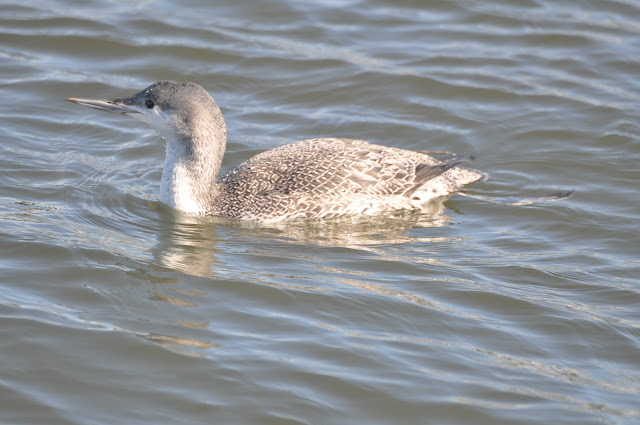
Red-throated Loon, Manasquan Inlet

Monday, January 11, 2021

Shark River Inlet | Manasquan Inlet 1/11--Purple Sandpiper, Black-headed Gull, etc.

Despite despising winter, I had a decent day birding two inlets. My original plan was to drive up Silver Lake in Belmar and get the Eurasian Wigeon reported there. Eurasian Wigeons are annual rarities up there, but this one was in a more accessible location than the usual spot on the Shark River where you have to find the right angle and stand on one foot and tilt your scope just so to find it. A nice, open lake with no obstructions. And no waterfowl this morning because it is winter and really cold and the lake was frozen. 

Purple Sandpiper
At least the Shark River Inlet was only a couple of blocks north, so I went there hoping for some ducks, or snow buntings, or winter finches. But the new bird for the year was one I wasn't thinking about, Purple Sandpiper. Usually I figure I'll get them at Barnegat Light, where they're ubiquitous in winter, but of course, any old jetty will do and there they were, mixed in with the Sanderlings. I also saw, across the way, a couple of Lesser Black-back Gulls roosting with a large flock of Herring Gulls. Not a rarity by any means, but good to find on my own.

From there I drove down to Lake Como, which, for some reason, had more open water and more waterfowl. I thought maybe the Eurasian Wigeon would have moved down there (it's only about a mile) but I only found, along with the Mallards, Ruddy Ducks, and Hooded Mergansers, two Pied-billed Grebes and a dozen American Coots, as new year birds.  I circumambulated the lake (hi Ellen!) and at found that it is 1.2 miles around. 

Now came the obligatory birding part of the day. Almost all winter I have been avoiding going to the Manasquan Inlet because I generally don't like standing on a jetty in winter winds sea watching. I like to move around, but having moved around, and being only a few miles away, I figured I may as well go down there and try to get the two rarities that I have avoided going to get. 

Black-headed Gull
I pulled into the parking lot of the inlet and looked around not seeing much worth even starting a list for. Along the seawall were Herring Gull, Ring-bill Gull, Ring-bill Gull, Ring Bull, oh, Black-headed Gull! That was easy. And I started a list.

On the first day of the year up at Sandy Hook, one of our group found a young drake King Eider which we all got on and I was happy to get that rarity on the year list so fast. "That bird is dead to me now," I said, with the caveat, "except in Ocean County." An oxymoronic hen King Eider has been an habitué of the inlet for just about as long as the Black-headed Gull but I couldn't find it from that spot. I drove over to another parking lot and eschewing the scope, walked out to the jetty, figuring that if the eider was in the inlet, I wouldn't need more powerful optics than my binoculars. And as soon as I got onto the jetty, I found the duck, across the way. Too far at first for photos, the duck eventually drifted out almost to the end of the jetty and on my side. One could think of the hen King Eider as the Mona Lisa of ducks with its sly grin being a prominent field mark. 

King Eider
Finally, as long as I was in the neighborhood, I drove down to Lake of the Lilies, usually a great waterfowl spot in the winter but again, today, mostly frozen. All I saw were geese and gulls and a few random ducks of little interest. I wasn't even going to make a list until I got back to my car and looked in the short end of the "L" shaped lake and found 24 American Coots swimming in open water. Since I "needed" coots for the county, I relented a made a list. 

American Coots
The temperature was peeking above freezing but I'd "accomplished" enough for one day and headed home, only to find, that, with the thaw, more ice must have melted on Silver Lake because around 1 PM, the Eurasian Wigeon was sighted. Well, the compensation with winter birds is that you get two shots at them--if you miss them in the first 3 months of the year, there's always the 2nd chance at the end. 

Thursday, June 11, 2020

Wesley Lake 6/11-- Cliff Swallow

Barn Swallow
I probably wouldn't have made a special trip up to Wesley Lake in Ocean Grove this year to see the Cliff Swallows that nest there under one of the arched concrete bridges, but since a dental appointment in Sea Girt had me only 13 minutes away (excluding the wrong turn I always make of Rte 71), I drove up there late this morning. At first I saw no swallows, but after figuring out the parking payment machine a swallow flew right over my head. Looked good and I followed it as it swooped over the the grassy area across the street and then when it landed on a chain blocking access to a path. Was I having the good fortune of actually see a Cliff Swallow in non-motion? All the times I have gone there I have been lucky if I got a blurry shot of one zipping over the water. And, disappointingly, this bird turned out to be a Barn Swallow as it had no "headlight" on the crown. 

Northern Rough-winged Swallow
In fact, all the swallows swooping over the water and lawns looked like Barn Swallows to me--even the ones without the deep swallow-tails were obviously juveniles since I could see white spots on their tails. But finally, as I stood on the bridge I saw one with an obvious white spot and then later I could see swallows flying up into the recesses of the arches where they presumably nest. So, no pictures of Cliff Swallows. But I did get the best pictures of Northern Rough-winged Swallows I've ever taken, so that was a little bonus. The other entertainment there was watching an Osprey pick a huge fish right out of the lake by just letting its talons graze the surface of the water. 

Least Tern
My next stop was a few miles south at the Shark River, another annual visit where I like to look at the Least Tern colony. They were there, in good numbers, though this year I must have been a little early for the nestlings to have arrived since all I saw were adults courting each other with one feeding the other a small fish. I listed 40 terns, which broke the eBird filter. Forty Least Tern probably would be alot anywhere else in Monmouth County, but the filter doesn't allow for the one nesting site in the vicinity. A couple of American Oystercatchers were present, one sitting on a nest too. There are sometimes Black Skimmers there, to round out the nesting colony, but not this time. 
American Oystercatcher

On nest


Saturday, February 1, 2020

North Coast Ponds & Inlets 2/1--Laughing Gull, Merlin

Laughing Gull, Manasquan Inlet
I drove up to Point Pleasant Beach for Carole's NJ Audubon trip to the ponds and inlets on what you might call the "Southern North Coast," which ends at PPB and starts at the Shark River, though we do the trip in the reverse. Because I was early, I made my first stop Lake of the Lilies. In the large scaup flock (stipulated: there are both greater and lesser in the flock) I was hoping for a Redhead to slip in but, as was the case on Wednesday, no. However, a bird I wasn't expecting zipped right by me--a Merlin on a mission flying low and fast over the pond and behind a house.

There was no construction going on at the Manasquan Inlet so we were able to access the jetty. The attraction there was the very cooperative Razorbill that was bobbing at the mouth of the inlet. The looks were fairly close, which was very satisfying since it was a lifer for one of the members of our group. After a trip back to Lake of the Lilies and a lesson on scaup identification (all of which I know but most of the time cannot apply), we returned to the inlet, birding the western part along the parking lot. There, right in front of where I parked my car, was an immature Laughing Gull, which I didn't notice until Carole pointed it out. This is probably the same gull I didn't find on Wednesday. A LAGU in mid-winter is very unusual in these parts but the weather has been warm which must be part of the explanation.

It is certainly the explanation for the dearth of ducks on the ponds and inlets. In the autumn ducks get physiologically ready to migrate but they don't actually move until they have to--a propensity I have to say I share with them. So, not only is warm down here, but it is warm up there and that's where, I'll wager, all the ducks are. Of course, warm for a duck and warm for me are two different climates--I could use another 30 degrees tacked on to today's high. Wreck Pond had very little on it, aside from a hefty flock of Gadwalls, Lake Como and Silver Lake had geese and gulls, the Shark River inlet had a few loons, and the Shark River Marina had the usual stupendous numbers of Mute Swans and Brants, along with the expected Buffleheads & Red-breasted Mergansers.

Eurasian Wigeon with American Black Duck (digiscope)
My final stop (I had to cut out a little early to go up to Iselin) was Maclearie Park where we hoped to find the ever-present Eurasian Wigeon. I plunked down my scope and before I could even begin a scan of the American Wigeon flock, Carole announced that she had the bird. It was sleeping on a little patch of beach in front of a concrete block encasing culverts. That was easy. This must be the same drake returning for the 3rd or 4th year or else there is something mysteriously attractive about this stretch of the water along Rt 35 between the park and the Shell station to Eurasian Wigeons.

My last bird of the day was a Northern Mockingbird up at the family homestead in Iselin.
44 species to start the month.
Species   First Sighting
Brant   Manasquan Inlet
Canada Goose   Lake of the Lilies
Mute Swan   Wreck Pond
Northern Shoveler   Wreck Pond
Gadwall   Wreck Pond
Eurasian Wigeon   MacLearie Park
American Wigeon   MacLearie Park
Mallard   Lake of the Lilies
American Black Duck   Manasquan Inlet
Greater Scaup   Lake of the Lilies
Lesser Scaup   Lake of the Lilies
Surf Scoter   Spring Lake
White-winged Scoter   Manasquan Inlet
Black Scoter   Manasquan Inlet
Long-tailed Duck   Manasquan Inlet
Bufflehead   Manasquan Inlet
Hooded Merganser   Lake of the Lilies
Red-breasted Merganser   Manasquan Inlet
Ruddy Duck   Lake of the Lilies
Mourning Dove   Lake of the Lilies
American Coot   Lake of the Lilies
Purple Sandpiper   Manasquan Inlet North Side
Razorbill   Manasquan Inlet
Laughing Gull   Manasquan Inlet
Ring-billed Gull   Lake of the Lilies
Herring Gull   Lake of the Lilies
Great Black-backed Gull   Lake of the Lilies
Red-throated Loon   Manasquan Inlet
Common Loon   Manasquan Inlet
Double-crested Cormorant   Lake of the Lilies
Great Blue Heron   Lake of the Lilies
Bald Eagle   MacLearie Park
Red-tailed Hawk   MacLearie Park
Merlin   Lake of the Lilies
Fish Crow   Manasquan Inlet North Side
Carolina Wren   Wreck Pond
Northern Mockingbird   18 Aberdeen Avenue
House Sparrow   Lake of the Lilies
Song Sparrow   Lake Como
Common Grackle   Wreck Pond
Boat-tailed Grackle   Manasquan Inlet
Northern Cardinal   Lake Como

Thursday, May 30, 2019

Wesley Lake 5/30--Cliff Swallow


I hadn't added a new bird to the list for over a week; a combination of birds moving on, bad luck, bad moods, and other things to do. So this morning I decided to drive up to Wesley Lake between Asbury Park and Ocean Grove because Cliff Swallows have returned to the bridge that crosses the lake. It was yet another cold, dreary morning in this seemingly endless series of them, and I thought perhaps the swallows wouldn't be out since the insects might not be flying.

From the car it didn't look promising, but as soon as I got on the bridge I saw swallows and while it took a little while to make the i.d. (especially since there was a Barn Swallow mixed in to the group), I finally saw the "headlight" on the forehead of the birds and checked it off the list. No real skill involved, no hunting around a big area, just go, look, tick.

It is interesting how site loyal birds can be. Not only do they return to the same area, but of the two bridges there they are at the same one as previous and, if memory serves, they're using the same arch as last year to build their nests. And because there are so many possible sites for them to use, I always wonder what makes this site the one or is there nothing particularly special about it and the choice is just random. As Myron Cohen use to say: Everybody's gotta be someplace.

I drove down to the Shark River Inlet to look at the Least Tern colony. Amazing how quickly it builds up. Last week, Shari & I stopped by and there were maybe 20 terns and none of them looked like they were nesting. Today there were at least 100 terns in the stringed off area, half of them on nests and the other half bringing food to the mate, while on the beach itself there was a long line of terns roosting. I also saw about 30 Black Skimmers, though only two looked like they had made a nest, along with one American Oystercatcher sitting on its nest. A Piping Plover rounded out the list of fun birds you'd expect to see there.
Black Skimmers, Shark River Inlet
Afterward, I drove inland to Assunpink, where I took my second unsuccessful walk in 3 days in the aviation beacon field looking for chats. I know they're there. But it always takes me multiple trips to find them.

Wednesday, June 20, 2018

Shark River Inlet 6/20

Brown Pelicans FOY USA
(click any photo to enlarge)
I had a dental appointment this morning in Sea Girt (or Sea Grit, as Shari likes to mispronounce it), which isn't far from the Shark River Inlet so I drove up there just for the fun of looking at the Least Tern breeding colony, while at the same time hoping I'd come up with something new for the year--I was thinking Royal Tern, hoping Roseate Tern, dreaming Sandwich Tern. There is a season, tern tern tern, but this was not the season.

However, there were other rewards. In amongst the 75 to 100 terns sitting on their ridiculously rudimentary nests were a few oystercatchers and large group
Semipalmated Plover
Piping Plover
of Black Skimmers, along with one Semipalmated Plover, a rarity, it seems, this time of year in Monmouth County. There was also a more exciting Piping Plover which, since they breed in NJ, aren't considered rare. Endangered yes, but you can find them if you look in the right places. This Piping Plover was probably immature, judging from both its coloration and its fearlessness around beachgoers. I'm sure none of the other people on the beach knew there was an endangered species right under their feet. Since the bird is the color of sand, I bet half of them didn't even see it.

I also had the pleasure of running into a birder I know and she and I spent a pleasant time watching the Least Terns fly in and out, some birds bring food to the nest sitters.
Least Tern delivering food to mama and chick
The highlight there was the two birds sitting very close to the edge of the colony that had chicks. I had never seen tern chicks before (juveniles of course, but not chicks) and these were adorable. Least Terns are feisty birds and they have to be to protect their young in such open, vulnerable conditions. Nowhere to run to, nowhere to hide and I'm sure the chicks are a tasty morsel for any of the 3 species of gulls commonly found on the beach this time of year, along with crows and who know what other random predators.

I happened to glance up and look north over the jetty which is when I spotted the 3 Brown Pelicans flying over the inlet. This is early for pelicans and I was excited to see them, not remembering that I'd already seen plenty of them when we were in Mexico in April. However: country bird, state bird, county lifer bird, month bird. Plus: fun bird. How can you not love seeing these "flying boats?"

I spent a little over an hour walking around the fenced off area. I don't know who maintains this area each year, but they do a good job and I'm thankful the birds are protected. Obviously, a bird that nests in such precarious circumstances (the skimmers and oystercatchers are in the same predicament) needs all the help and isolation it can get.

My list:
16 species
Double-crested Cormorant 1
Brown Pelican 3
American Oystercatcher 4
Semipalmated Plover 1
Piping Plover 1
Laughing Gull 6
Least Tern 75
Common Tern 2
Black Skimmer 42
Rock Pigeon 1
Northern Mockingbird 2 Chasing grackle
Song Sparrow 1 Heard
Northern Cardinal 1 Flying parallel with boardwalk
Red-winged Blackbird 1 In tree at entrance
Common Grackle 10
House Sparrow 5 On jetty and beach

Least Tern & chick